A SERIES-PRODUCED ALL-SEASON MOTORHOME: WHY IT'S HARD
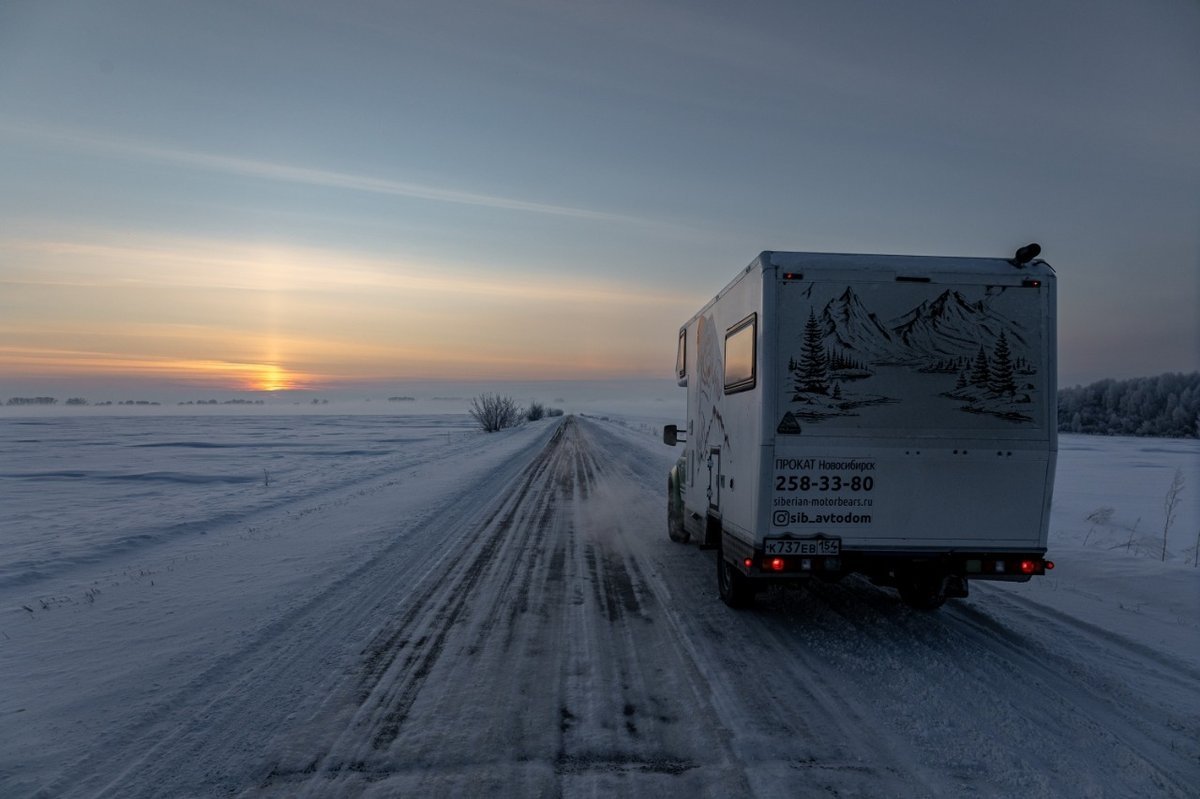
We're currently designing a small-series all-season motorhome in category B — that is, with a gross weight up to 3,500 kg, so the vehicle can be driven on an ordinary license and the buyer isn't required to have a category C license or a medical exam. The task sounds simple until you sit down to do the math. Into that weight you have to fit the chassis, the cab, the living module, tanks, batteries, the heater, furniture, appliances, water and fuel reserves, and on top of that — luggage and passengers. And all of it has to work properly not somewhere near Munich at minus ten, but in our Siberian winter, where minus thirty-five isn't a catastrophe but a normal working temperature for weeks on end.
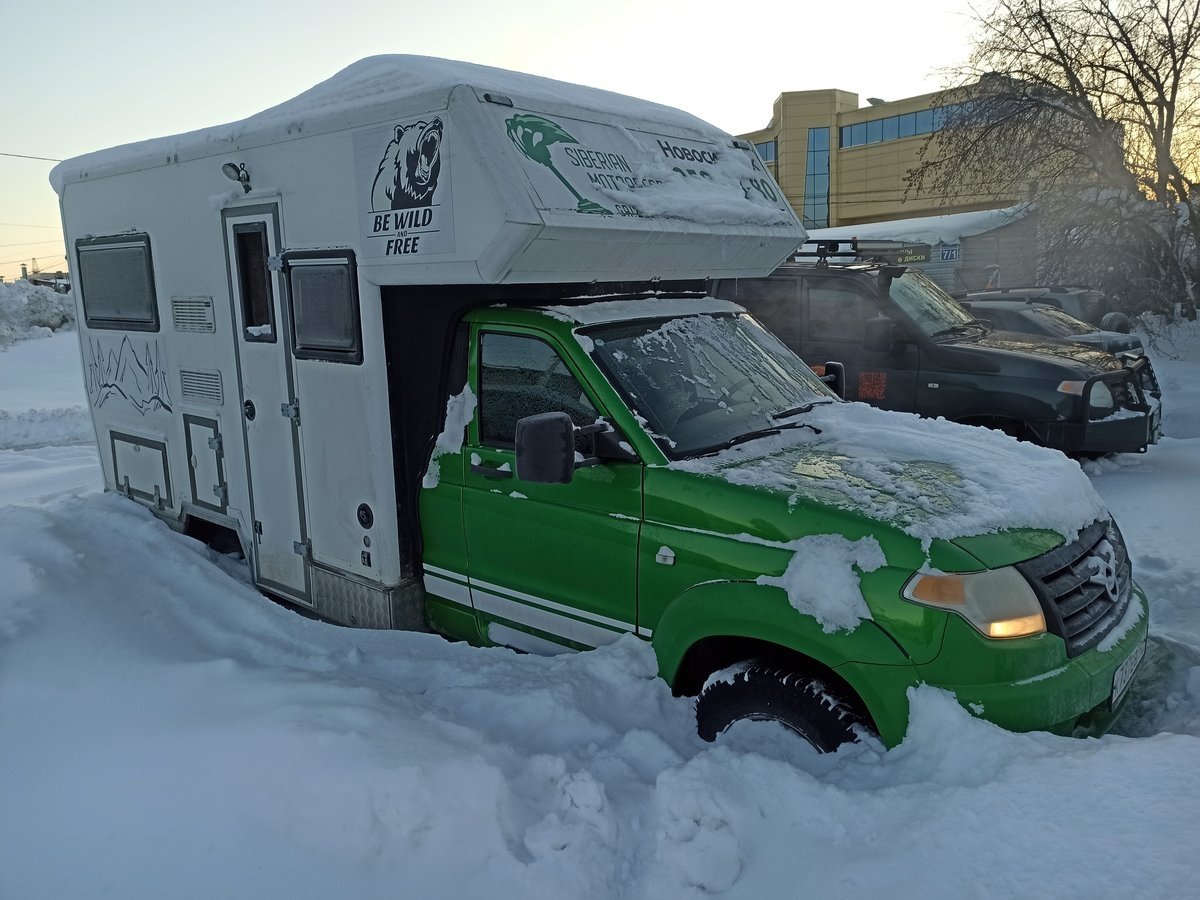
If you build such a vehicle on a truck chassis — KAMAZ, Ural, Sadko — there are no particular problems: the payload allows thick walls, heavy tanks inside the warm envelope, a large generator, any battery reserve you like. But a truck is always a one-off expedition build, not a series product. The series lives in category B, and there you have to fight for every kilogram.
EUROPE: WINTERFEST, GRADE III, AND WARM DOUBLE FLOORS
In Europe, the winter motorhome is its own marketing category. Manufacturers sell "wintertauglich" or "winterfest" vehicles at a noticeable markup. By this they usually mean compliance with climate class III under standard EN 1646-2: the interior holds +20 °C with the outside at −15 °C for an unlimited time, and from a cold start the vehicle reaches operating temperature within a reasonable interval. Class III is the highest; below it come class II (simply "heated") and class I ("basic").
What this means in terms of construction. First, thick sandwich panels with XPS or PUR (polyurethane foam) inside: walls 35–55 mm, roof up to 60 mm, the floor often double with an air channel for warming by hot air from the heater. Second, the fresh and grey water tanks are moved inside the insulated envelope — under the cab floor or under the sofas. Third, a Truma Combi or Alde hydronic heater delivers heat to both air and water at the same time, plus warm double-glazed Seitz S7 windows come as standard. Fourth, wiring and pipes are routed through warm cavities.
The reference models are the Hymer B-MasterLine with PUAL panels (aluminum-polyurethane-aluminum without a wooden frame), the Niesmann+Bischoff Arto, the Concorde Cruiser, the Bürstner Lyseo TD Harmony Line. All of them claim the ability to work "all winter in the Alps." The Alps average −10…−20 °C at night at altitude, sometimes down to −30 °C in extreme cases. That is, European Grade III is designed around roughly −20 °C as a working point and down to −30 °C as a short peak. Below that Europeans simply don't bother to consider it: they have no market there.
There are exceptions. The Norwegian and Finnish Polar Camper is built on the Mercedes Sprinter with an extra-cost "arctic package": triple glazing, double layer of insulation, warm loops under the tanks. The Hymer Grand Canyon S 4×4 claims operation down to −30. But these are already small-series products with long waiting lists.
THE US: ARCTIC PACKAGE AND GAS HEATING
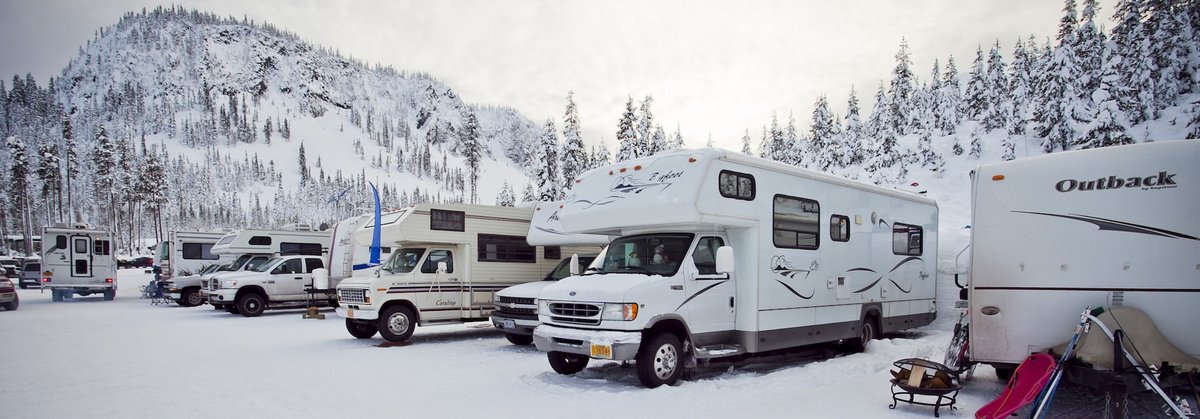
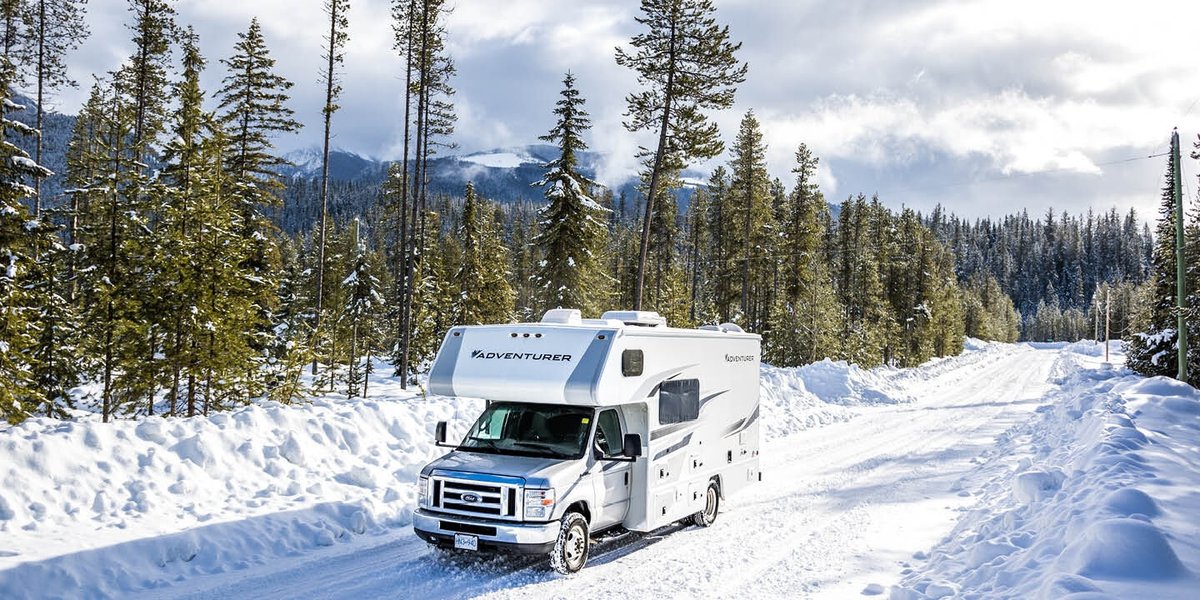
In North America the winter trim is called "four-season" or "arctic package." Since the American market isn't squeezed by the 3,500 kg limit, they take a different route: they don't fight for every gram, they just pile on insulation and heat with whatever is on hand. Northwood Arctic Fox is an entire brand built around winter use, with a heated underbelly, electric heaters on the tanks, heaters on the drain valves, a floor with an air channel. Lance, Bigfoot, Outdoors RV — roughly the same.
American "arctic" units typically claim operating temperatures of −20…−25 °F, or −29…−32 °C. That's already close to our target point, though it doesn't quite reach it. And at the same time most of these homes are heated with propane (LPG): a Suburban or Atwood heater, the cooktop, the water heater — all on gas. Gas starts to behave poorly at −30 (the butane fraction stops vaporizing); at −35 pure propane still breathes, but pressure drops and efficiency declines. So even in the US, "real winter campers" switch to diesel: Espar Airtronic, Webasto Air Top.
Gas has other problems too: getting hold of it in remote areas is much harder than diesel, and together with its cylinders it weighs noticeably more.
The main thing is that the American experience can't be transplanted directly: their vehicles are too heavy. A Class C on the Ford E-450 chassis is 5.4 tons empty and 6.8 tons fully loaded. Here in Russia that immediately drops out of category B.
RUSSIA: BETWEEN THE EXPEDITION RIG AND THE SUMMER-HOUSE THREE-SEASON
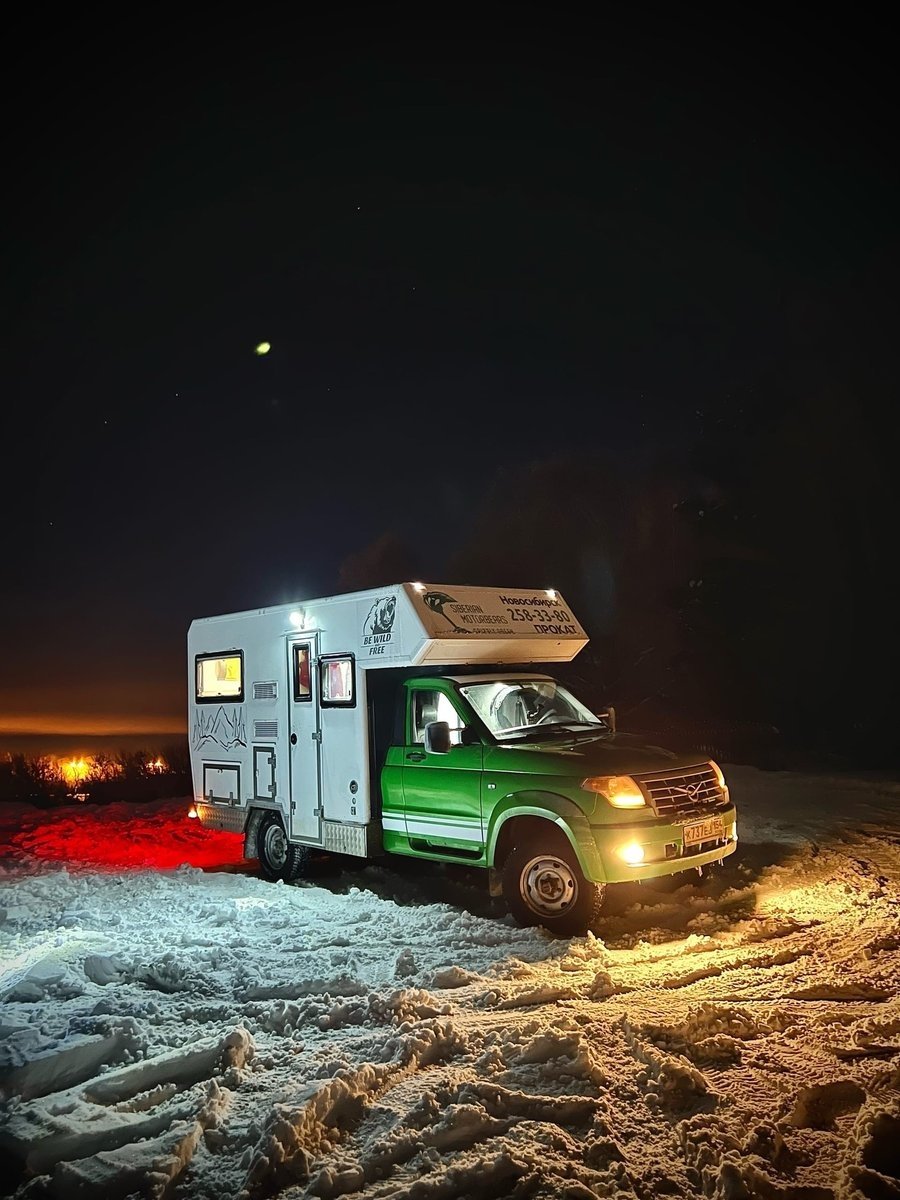
In Russia there are essentially no series-produced all-season motorhomes in category B. There are two established niches. On one side — expedition modules on KAMAZ/Ural, custom-built, 15–30 million rubles, one or two vehicles a year out of a workshop. On the other — kastenwagens, alcoves, and small trailers, which honestly work in summer and the shoulder seasons but in winter turn into a cold tin can: water freezes, windows ice over from the inside, the battery dies overnight. Between them — nothing.
INSULATING THE LIVING COMPARTMENT
The main construction question. Insulators that are in principle suitable for a motorhome:
- EPS (expanded polystyrene, ordinary "foam"): cheap, light, easy to cut. Drawbacks — low strength, when the cells are damaged it absorbs moisture, crumbles over time. In camper-building it's used only as a budget solution.
- XPS (extruded polystyrene, "Penoplex" and its analogues): many times stronger than EPS, practically doesn't absorb water, reasonable price. The most popular insulator in Russian small-series camper-building.
- PUR / PIR (polyurethane and polyisocyanurate foam): the best performer among accessible materials. Used in factory-made sandwich panels (originally for refrigerated truck bodies and commercial equipment).
Possible approaches to the structure itself:
- A ready-made sandwich with 60–80 mm PUR. The most direct route. Ordered from refrigerated-body manufacturers. Pros — proven factory technology, even geometry, sturdy fiberglass facings on both sides. Cons — the panels come in standard formats, fitting them to our shell is awkward, and the price is higher than doing it ourselves.
- A homemade sandwich panel on XPS. We glue XPS of the chosen thickness between sheets of fiberglass or aluminum-composite on our own bench. Two or three times cheaper than the ready PUR sandwich, easily cut into any shape, the material is available in any city. Cons — you need your own press bench, the bonding process is critical (otherwise it delaminates within a season), and the weight is slightly higher because the insulator is thicker.
- A framed structure with XPS infill. An aluminum or composite frame, with XPS or EPS between the profiles, plywood on the inside, fiberglass or sheet metal on the outside. Repairs well (you can open it up and replace a section), technologically simpler than a sandwich. Cons — thermal bridges through the frame, which in the case of aluminum eat up a significant share of the insulation.
CONDENSATION — A.K.A. HUMIDITY, THE SECOND ENEMY AFTER COLD
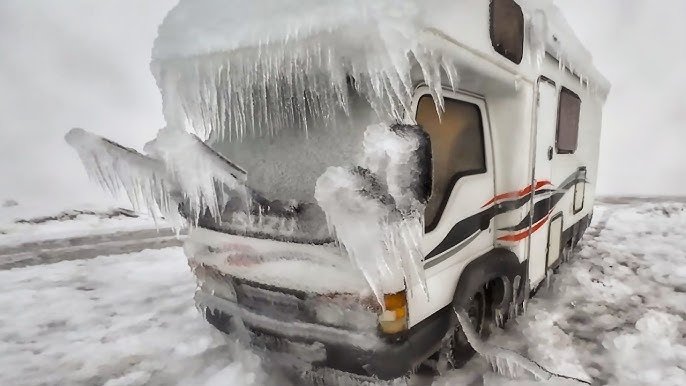
Two people breathe out about a liter of water during the night. Cooking — another liter or two. A shower — more still, and in heavy frost it's better not to indulge in one. If this moisture isn't carried out, it settles on the coldest surfaces — glass, corners, any thermal bridge. In winter it turns into hoarfrost that melts by day and runs down the walls. In one season a vehicle like this picks up mold, and in two — it can be written off.
Europeans solve this with passive ventilation through roof mushrooms, plus a vapor barrier on the warm side. At −10 it works. At −35 passive ventilation means a powerful inflow of icy air, which lowers the cabin temperature by 5–8 degrees and forces you to heat for nothing. The theoretical solution is a mechanical ventilation system with heat recovery (MVHR): it takes warm humid air from the cabin and uses its heat to warm the fresh outside air. The efficiency of such recuperators for housing reaches up to 90%. In an automotive build they exist only from a handful of European manufacturers, aren't shipped to Russia, and assembling one yourself from accessible components is a project in itself.
A simplified alternative is a dehumidifier plus short periodic airing-out. Less elegant than a recuperator, but it can be assembled from accessible components and repaired in the field.
MOISTURE-RESISTANT FURNITURE
Ordinary furniture board made of melamine-faced chipboard lasts three to five years in a camper. In a winter camper — one. Any seam between an edge and its trim soaks up moisture, the board swells, delaminates. The standard European solution is light furniture in poplar plywood with HPL coating on every edge. A good solution, but expensive.
The Russian alternative is marine birch plywood with impregnation, edged in aluminum or PVC. It's about one and a half times heavier than poplar, so we lose on mass. We can partly use honeycomb panels with aluminum facings (aviation-grade board) for interior partitions — they're both light and moisture-proof, but 3–4 times more expensive than plywood.
Hybrid approaches are also possible: load-bearing furniture from marine plywood, loaded surfaces (countertop, cupboard walls) from honeycomb panels.
WINDOWS — THE MOST PROBLEMATIC ZONE
A standard automotive Seitz S7 window is two acrylic panes with an air gap. U-value about 2.8 W/m²K. At −35 the inner pane of such a window will be around zero or slightly below — meaning condensation and frost will form on it at almost any moment when a couple of people are living inside. And heat loss through a typical 2 m² of windows gives about 300 W wasted, plus another similar figure through thermal bridges around the frames.
Options:
- Triple glazing. Used in premium European integrated motorhomes (Concorde, Morelo). Heavy — adds 15–25 kg per vehicle, expensive, not centrally imported into Russia.
- Double acrylic plus an internal thermal screen. A simple, inelegant but workable option. A foil-backed blind is fitted inside for the night. Sharply reduces heat loss, but requires hands-on work every evening.
- Architectural aluminum or plastic windows with a sealed unit of monolithic polycarbonate or acrylic. Thermally — a dramatic improvement over any acrylic camper window. The drawbacks are serious: the window profile is usually thicker than the motorhome's wall, the hardware and standard opening mechanism aren't tuned for a living module, the window isn't designed to be installed without reveals and trim, and on a vehicle such an opening looks alien.
- Minimizing window area. This conflicts with marketing ("bright, spacious"), but is physically correct. For expedition vehicles this approach has been standard for thirty years.
THE CAB — TAKEN OUTSIDE THE WARM ENVELOPE
The cab of a series-production chassis cannot be properly insulated. A steel roof without an insulation layer, thin plastic door cards, an enormous windshield, a transmission tunnel in the floor.
That's why we're consciously giving up the attempt to make a "winter semi-integrated." The cab stays a separate thermal volume, not joined into a single envelope with the living module. Between cab and living section there's a small door/window opening that, when parked, is closed off by an insulated door with the same build-up as the motorhome's walls.
This approach has its downsides too. You can't walk through from the living section into the cab — you have to open the door. And spatially you lose the visual "total length" of the cabin that owners of European semi-integrated motorhomes are used to. But you gain the main thing — the vehicle actually works in a Siberian winter.
WATER — FRESH AND GREY
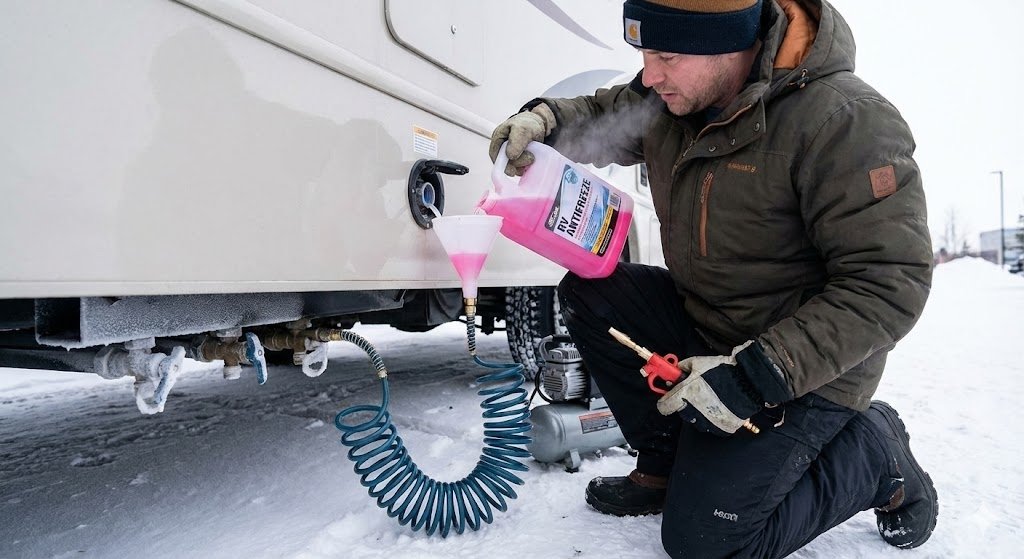
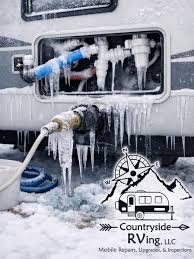
The main winter problem is ice in the tanks, pipes, and on the drain valves. Approaches:
- Tanks inside the warm envelope. The most reliable. Cons — they take up usable interior volume, and in case of a leak the cabin floods rather than the street. Most European winter motorhomes do exactly this.
- Heating elements on the tanks under the floor. The American approach. It works as long as there's electricity. At −35 the elements pull tens of amperes; the battery will be dead by morning without recharging.
- A double floor with hot air ducted from the heater. The European approach used by Adria and Knaus. Energy-efficient, doesn't require additional electricity. Downside — it requires the heater to run constantly.
- Pipes in an insulated channel along the inner wall, with a heated water inlet.
On grey water separately: it contains soap and grease, so it freezes a little later but forms hard, unpleasant ice. Experience shows that the grey tank also has to be kept inside the warm envelope, or given up entirely for the winter.
BATTERIES
Lead-acid AGMs at −35 deliver 30–40% of nameplate capacity, and on a deep discharge they can simply freeze and crack. LiFePO4 (lithium iron phosphate) cells discharge fine down to −20 °C, but you can't charge them at sub-zero temperatures — it destroys the anode. So you either have to warm the battery before charging or fit batteries with built-in heating (Battle Born Heated; Russian analogues have started to appear).
A realistic option for a series build: a LiFePO4 bank of 80–200 Ah with built-in heating or an active warming loop, placed inside the motorhome's warm envelope.
A fully autonomous winter stay without recharging isn't achievable in category B — there's neither the mass nor the volume for it. So we design around the scenario "every couple of days the battery is recharged either from the chassis on a leg of the journey or from a generator at a stop." Which also means a place for an external gasoline generator is a must.
HEATING
A baseline calculation — between 3 and 5 kW of heat are needed in heavy frost. Until 2022 the default standard was the German Webasto, Eberspächer, and Truma — but they're no longer shipped to Russia, and the dealer and service network has been wound down. So the options are being reconsidered around what's actually available:
- The Planar air-diesel heater (NPK "Advers," Samara). Russian-made, available in several sizes from 2 to 8 kW, constructively close to the Webasto Air Top, repairable, with parts on hand. Drawback — it only delivers air; for hot water you need a separate boiler or an inline water heater.
- A Binar-5B liquid heater (also Advers) or a Pramotronik. An antifreeze loop with radiators in the floor and under the shelves. The most comfortable solution — soft heat, a warm floor, and the same unit can pre-warm the engine before starting. Drawbacks — more complex installation, heavier than the air version, requires routing antifreeze through the whole vehicle, and a leak is a serious problem.
- A combined scheme (water + air). There's no direct analogue of the Truma Combi here. It's assembled from a pairing: a liquid Binar or Pramotronik plus an air heat exchanger and an indirect-heating boiler. More complex to design, but every component is available and can be serviced separately.
Most likely the core will be the scheme "a liquid Binar driving underfloor heating and the engine's pre-start warm-up + an air Planar handling the main cabin heat." This gives two independent heating loops (if one fails, the other will get you to a service point), all on a domestic component base, all repairable in any regional center.
SERVICE, SPARES, AND REMOTE AREAS
This is the part Europeans and Americans don't think about at all: within a 200 km radius they always have service, and at worst they wait a couple of days for a spare. Our situation is different. If a motorhome breaks down on the road between Neryungri and Yakutsk, the nearest specialized service center for auxiliary heaters could be three days' drive away. And with the German brands gone, the choice of services has collapsed to what regional masters do themselves with the Russian Binars and Planars.
All in all, an all-season motorhome in category B for a Siberian winter is a task on the edge of the possible. Every solution that's obvious in Europe (thin sandwich walls, acrylic windows, a gas heater, capacious batteries) has to be reconsidered. Every solution Americans add "as a bonus" (heavy electric heaters, large tanks, powerful electrics) runs into weight.
The finished vehicle will be a compromise on every front: slightly fewer windows, a slightly smaller cabin, slightly less water — but it will actually drive into Khakassia in December and not turn into an iron coffin along the way. Then again, any decent engineering solution is always a compromise :)